Survival of the Early Moated Site
Little or nothing now survives from the Bishop’s Palace at Buckden before the end of the 15th century, despite the four hundred years during which we know the site was in occupation before then. It is, however, possible that the shape of the moat has survived from the earliest times. This is made more likely from its shape; originally it seems a large circular ditch. There is a tendency for early moated sites to have a curving plan, while those of the later Middle Ages are more frequently rectangular. Buckden, then, may preserve in its inner enclosure a small moated castle site of the late 11th or early 12th century.
The Limited Archaeological Evidence
Apart from the evidence of the surviving buildings, there is very little help in understanding the structural history of the site. The most important source is the excavations of 1921-25 to the east of the house, but these were largely unrecorded, and the contemporary account published by the Royal Commission seems to have utilised a plan produced by the excavators, but with very little comment.
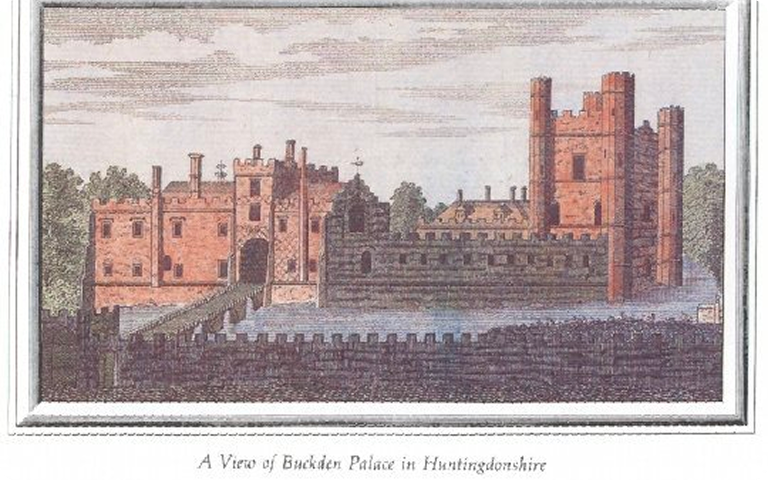
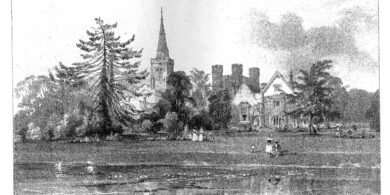
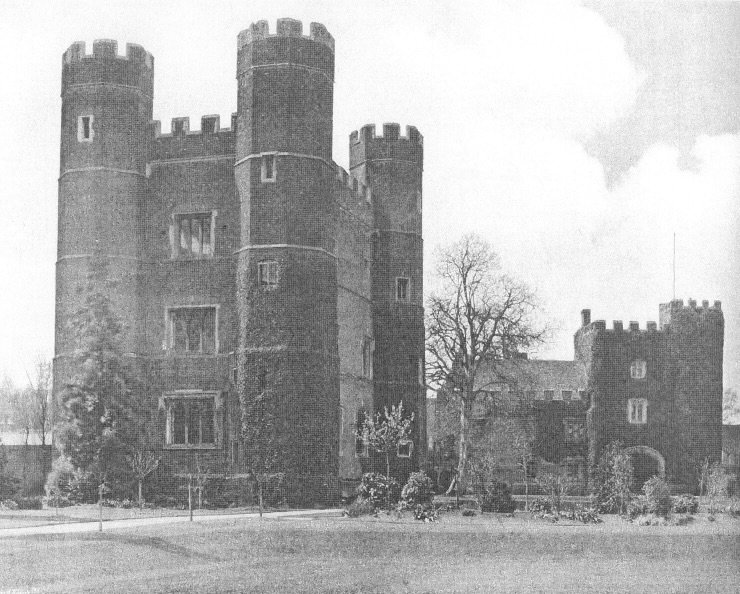
A view of Buckden Palace in Huntingdonshire
The 1921–25 Excavations and Their Interpretation
The Commission’s own records at Swindon are of great use in evaluating the then state of the buildings, but have nothing to say about the excavations. The interpretation of the 1925 drawing is given below, but without further information it is not possible to be dogmatic about the meaning of these foundations. According to the VCH discussion, the remains have been concreted over, in bringing the terrace up to a level, and so further work here must be very limited.
Identified Structures: Hall, Chapel and Chamber
The record preserved by the Commission shows structures identified as Hall, Chapel, and Chamber, with a series of other walls of varying thickness. Three of these are identified as having rubble foundations: the lower end of the Hall and the southern end, with a deviation at its eastern corner, and the eastern end of the Chapel. It is reasonable to see these as early, and place them in the 13th century or earlier.
A thinner brick foundation which occupies part of the southern end of the Hall and extends to the east end of the chapel is probably part of a rebuilding after the demolition of the Great Hall after the Civil War, and before the rationalizing of the area which is shown by the plan of c.1837 shown in Rudge. It is perhaps the line of the path shown in his plan.
Similarly, the brick foundation of medium width which runs from the southwestern corner of the Hall, which includes a stair turret at the point of junction, is probably to be dated to the 17th-century rebuilding, and is shown as a turret at the left of the west front in Rudge’s drawing, and as a stair in his plan.
Small square chambers visible at the northern side of the rebuilt Chapel and in the center of the cloister were perhaps garderobes belonging to the 16th and 17th-century rebuildings. The western side of the Great Hall and its porch were exposed, and are noted as being brick. It is thus likely that this part of the building was rebuilt at the time of the 15th-century construction.
Reconstructing the Early Palace Layout
One can be reasonably confident that the layout of the interior of the early moated site would include a Great Hall, chambers and service rooms. The best analogy is perhaps the royal palace at Clarendon near Salisbury, where Henry II in the late 1150s constructed a complex of hall, chambers and services on a scale similar to that at Buckden.
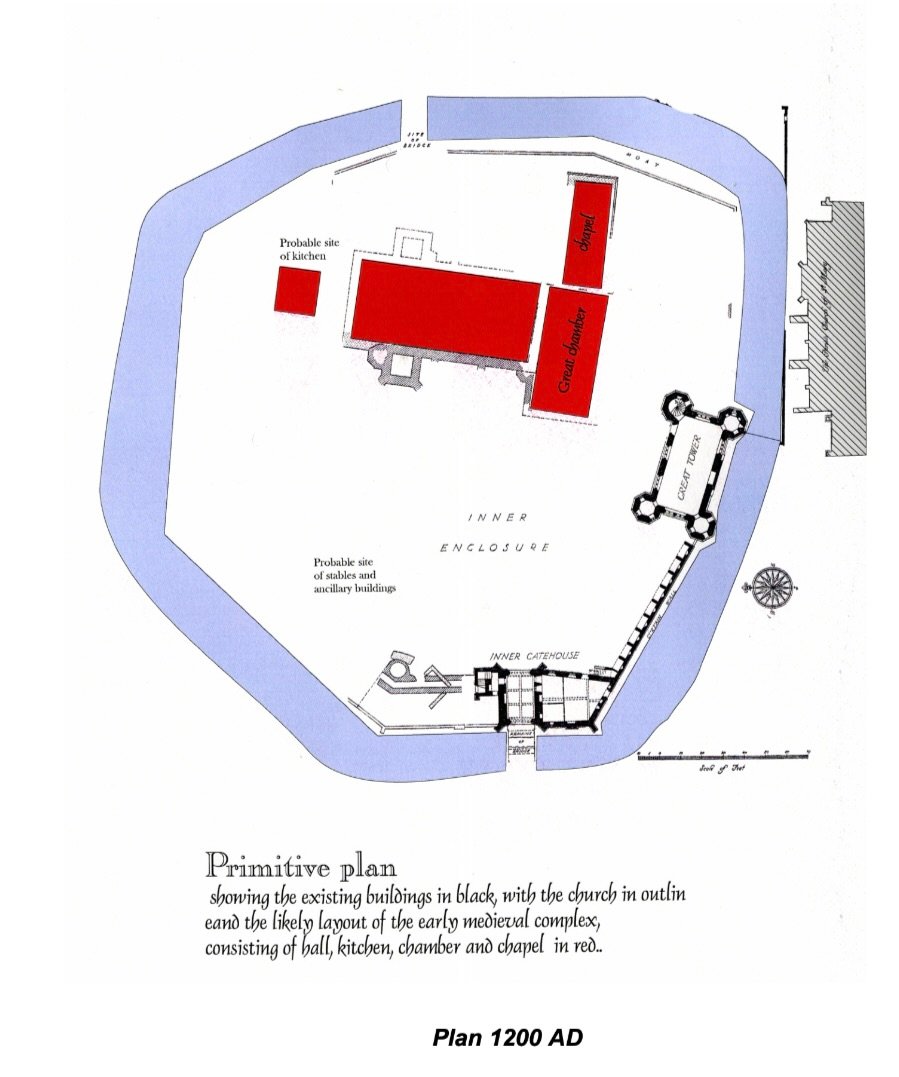
The first reconstruction plan shows the possible layout of the inner moat, with a hall whose lower end lay to the north, and which had the Great Chamber lying across its upper end. It is reasonably certain that such a site would have had its own chapel, opening off the Great Chamber.
Ancillary Buildings and Courtyard Arrangement
It is likely that the courtyard between the Hall and the western side of the moat was filled by one or two ranges of ancillary buildings, including stables or further lodgings for attendants and guests and their staff.
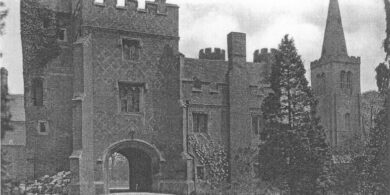
Some buildings would be expected to lie in the outer courtyard, between the Outer and Inner Gatehouses. The present location of the Inner Gatehouse is a little anomalous, and perhaps it had a predecessor slightly further north to align with the cross passage of the Hall.
The Rebuilding of c.1292–3
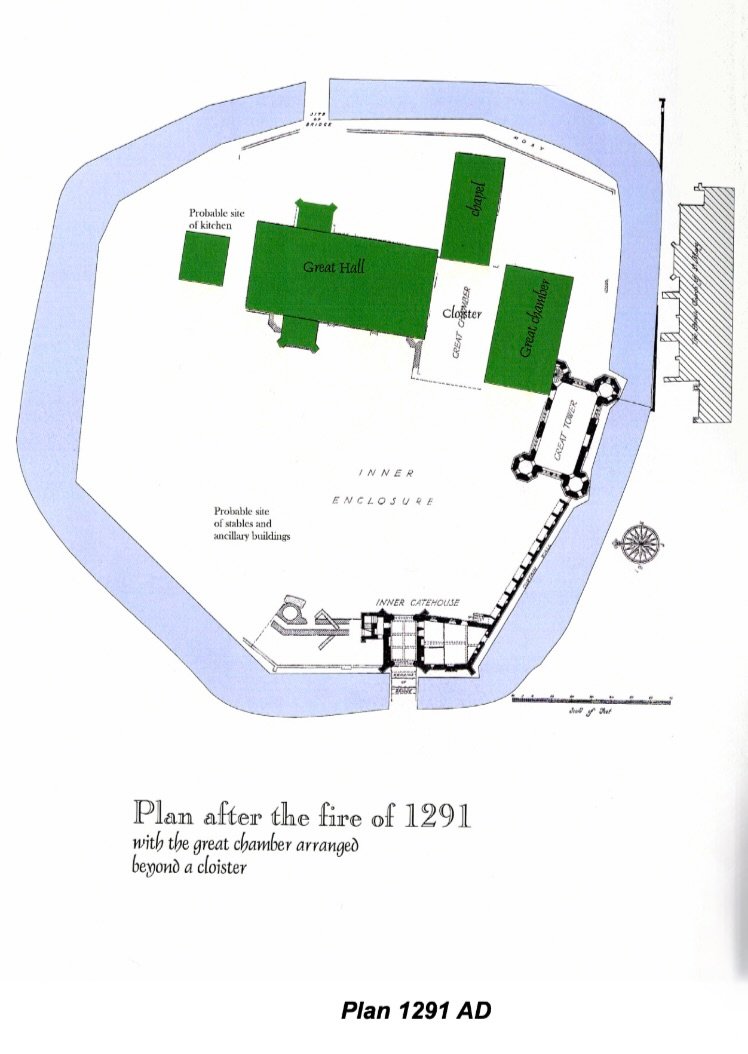
The fire of 1291 is attested in a contemporary source, though its scale is not clear. During the rebuilding it seems that the opportunity was taken to make the Great Chamber more remote from the Hall, by constructing a small courtyard or cloister at the southern end of the Hall.
Early illustrations show two-light pointed windows for which a late 13th-century date is reasonable. The alignment of Hall, Chapel and Chamber is not rectangular, suggesting that the layout of the new work was based on earlier features of the moat.
The vaulted porch of the Great Hall could belong to this period, though evidence also suggests later 15th-century rebuilding.
The Major Rebuilding of 1470–1490
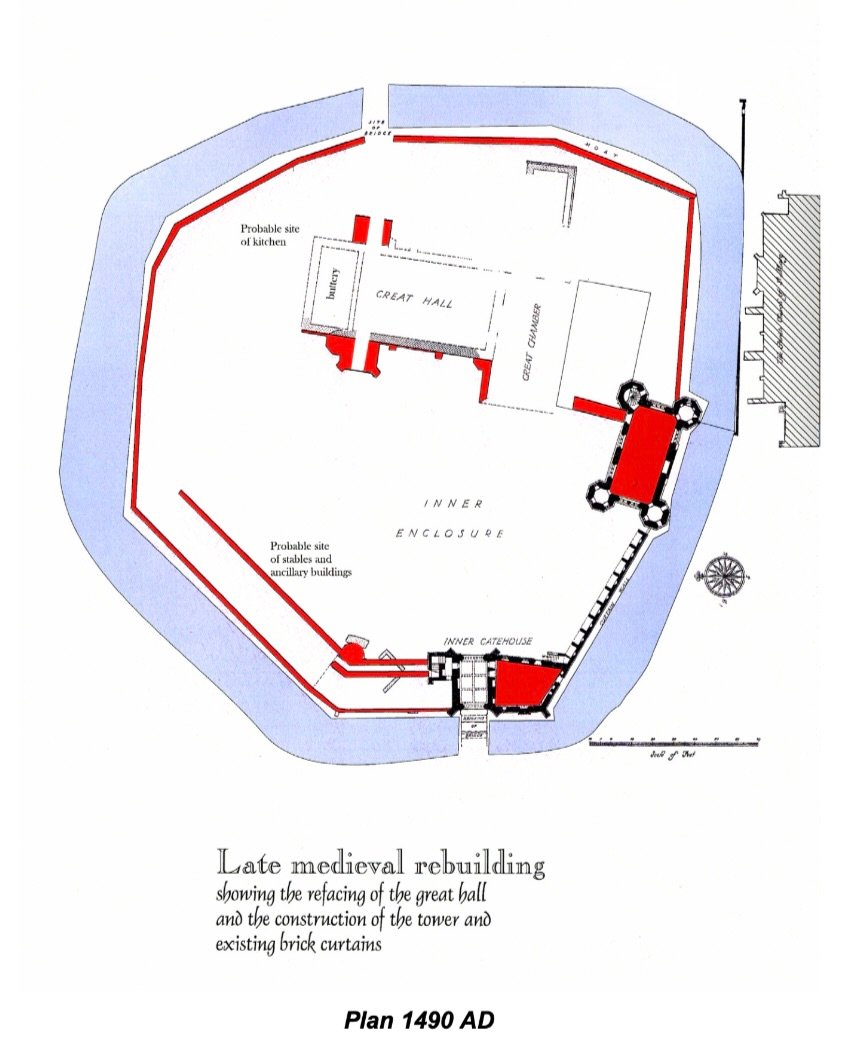
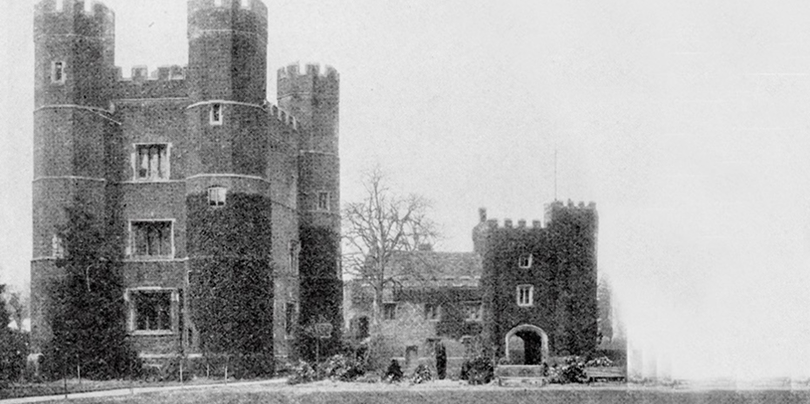
The manor was thoroughly rebuilt between 1470 and 1490, including all the surviving medieval buildings. The addition of the great tower was the greatest development on the site since the 1292 rebuilding. It likely served both symbolic and residential functions, providing a grand withdrawing room and state chambers above.
The Later Palace (c.1837 Plan)
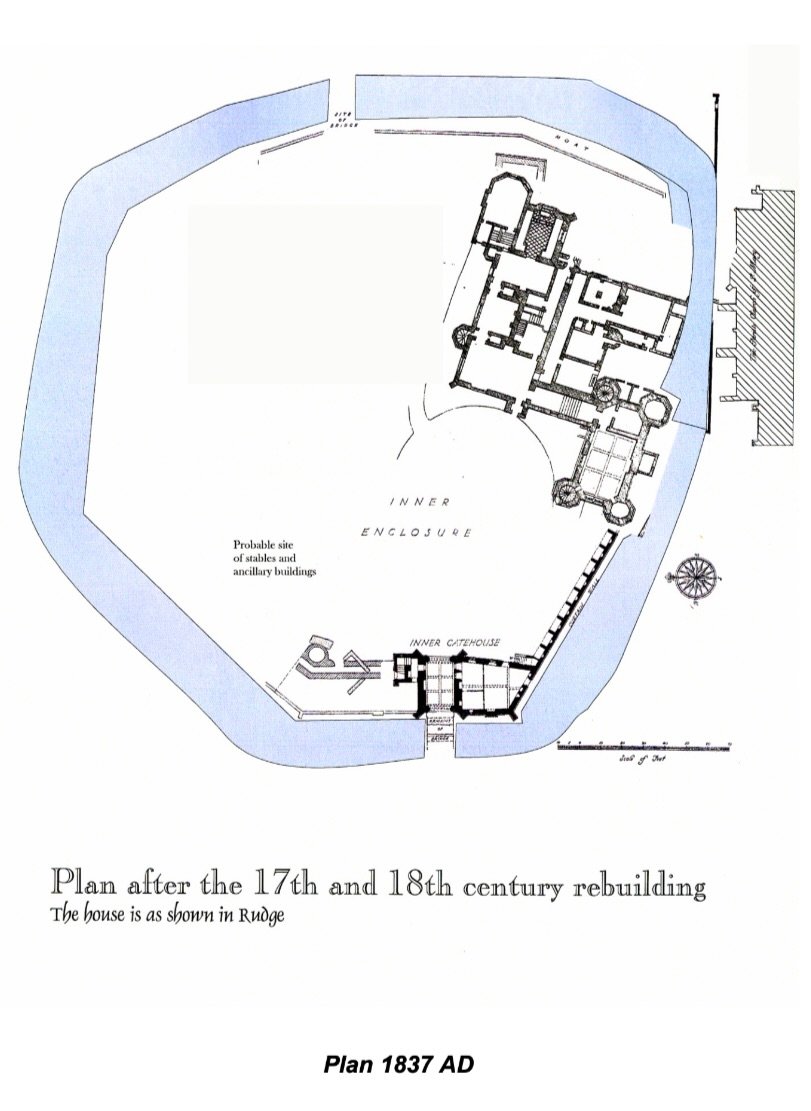
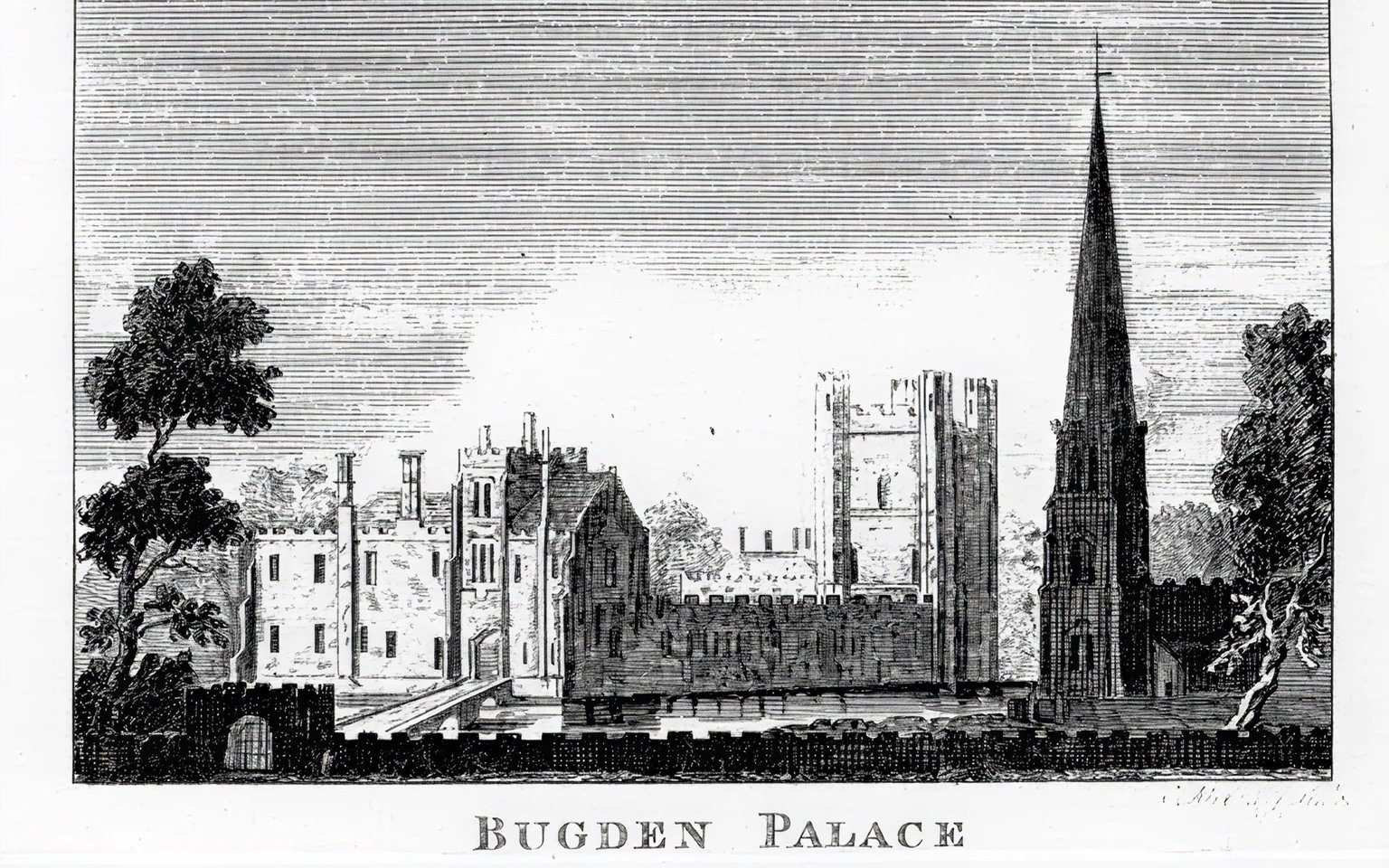
Knowledge of the later palace derives from the plan published in Rudge (1839). The drawing shows misalignments between the Great Chamber, Chapel block, and Tower, likely resulting from assumptions of rectangularity.
The result was a compact and monumental western frontage but a rambling and complex eastern arrangement with intercutting rooflines.